
|
Pharmaceutical Science & Technology
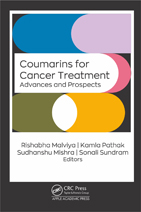
Reviews “An in-depth discussion of coumarin research, encompassing issues such as extraction procedures, physicochemical features, targeted drug delivery systems, and clinical studies. . . . Delivers a thorough understanding of the principles that underpin coumarin anticancer properties and their prospective clinical uses. It discusses prodrug design strategies, nanoformulations, target-based derivatives, and coumarin-specific applications in diverse cancer types. Coumarin mechanisms of anticancer action are also investigated, offering information on their potential as enzyme inhibitors, radiosensitizers, and medicines targeting pathways involved in cancer growth. The book highlights the current state of coumarin research while also highlighting future directions and potential for cancer therapeutic innovation.” —From the Foreword by Prabhat Kumar Singh, Vice Chancellor, Uttar Pradesh University of Medical Sciences, India Coumarin, a naturally occurring benzo-á-pyrone compound that is most often used as a fragrance ingredient, is also beneficial in the treatment of prostate cancer, renal cell carcinoma, leukemia, and other cancers. This new volume provides an in-depth discussion of the various applications of coumarin compounds in cancer treatment, exploring the most recent developments, extraction processes, and tailored approaches to use coumarins for cancer treatment. It presents a complete overview of the distinct uses of coumarin compounds in cancer treatment as well as insights into their various modes of action and therapeutic efficacy. The book also addresses coumarin potential as an enzyme inhibitor for cancer management, the therapeutic potential of natural coumarin lead compounds, and the use of coumarin derivatives as radiosensitizers in cancer treatment. CONTENTS: About the Authors / Editors: Editors: Rishabha Malviya, PhD Professor, Department of Pharmacy, School of Medical and Allied Sciences, Galgotias University, India Rishabha Malviya, PhD, has 15 years of research experience and has been working as a Professor in the Department of Pharmacy, School of Medical and Allied Sciences at Galgotias University, India, for the past 11 years. His area of interest includes formulation optimization, nanoformulation, targeted drug delivery, localized drug delivery, and characterization of natural polymers as pharmaceutical excipients. He has authored more than 200 research/review papers for national/international journals of repute. He has 58 patents (19 grants, 38 published, one filed) and publications in reputed national and international journals with more than 450 cumulative impact factor. He has received an outstanding reviewer award from Elsevier. He has authored and/or edited 120 books (Wiley, Springer Nature, De Gruyter, CRC Press/Taylor and Francis, River Publisher, Apple Academic Press, Nova Science Publishers, and OMICS International) and authored 81 book chapters. His name has been included in the world’s top 2% scientist list for the years 2020–2025 by Elsevier BV and Stanford University. He is a reviewer, editor, and editorial board member of more than 50 national and international journals of repute. He completed a BPharm from Uttar Pradesh Technical University and an MPharm (Pharmaceutics) from Gautam Buddha Technical University, Lucknow Uttar Pradesh, India. His PhD (Pharmacy) work was in novel formulation development techniques. He has been invited as an author for Atlas of Science and for the pharma magazine dealing with industry (B2B), Ingredient South Asia Magazine. Kamla Pathak, PhD Dean and Professor, Faculty of Pharmacy, Uttar Pradesh University of Medical Sciences, Etawah, India Kamla Pathak, PhD, is Dean and Professor, Faculty of Pharmacy, Uttar Pradesh University of Medical Sciences, Etawah, India. With teaching and research experience of more than 30 years, she is actively engaged in research on oral controlled, modulated, and targeted and topical drug delivery systems, and has received many awards for her work. She has over 270 publications in journals of international and national repute. She also holds three patents and has authored four books and more than 20 book chapters. She has also written many abstracts in various scientific forums and has been a reviewer for national and international journals in pharmaceutics. Professor Pathak has served as a member of the editorial advisory board of AAPS Pharm Sci Tech and is also a member of various professional bodies. She has guided more than 120 PhD and postgraduate students. She is also associated with the Indian pharmaceutical industry in the capacity of a scientific consultant. She is credited as reviewer for several scientific projects, including those of the Knowledge Foundation, Sweden, and Israel Science Foundation. She has participated at national and international seminars and conferences as organizer, invited speaker, and chairperson of scientific sessions. She has been listed in the top 2% Indian scientists in the subsection Pharmacology and Pharmacy, in the World’s Top 2% Scientists list released by Stanford University in 2020–1013. She graduated (Pharmaceutics) from the University Institute of Pharmaceutical Sciences, Panjab University, Chandigarh, India, earning her doctorate in Pharmacy in 1991 from the same institute. Sudhanshu Mishra, MPharm Faculty of Pharmaceutical Sciences, Mahayogi Gorakhnath University Gorakhpur, Uttar Pradesh, India Sudhanshu Mishra, MPharm, completed his MPharm (Pharmaceutics) from the School of Pharmaceutical Science, Rajiv Gandhi Proudyogiki Vishwavidyalaya, Bhopal, and is pursuing his PhD from Dr. A.P.J. Abdul Kalam Technical University, Lucknow, Uttar Pradesh, India. He is current working as Assistant Professor in the Faculty of Pharmaceutical Sciences at Mahayogi Gorakhnath University Gorakhpur Uttar Pradesh, India. His areas of interest include novel formulations, nano-herbal formulations, transdermal drug delivery, and localized drug delivery. He has authored over 50 research and review articles for national and international journals. He is currently working on different novel approaches and technologies for targeting chronic diseases. He serves as a reviewer and is also an editorial board member of national and international journals. He participates in academic activities such as international seminars, conferences, workshops, and oral presentations. This book is one of the important contributions to his interest in healthcare and future research areas. Sonali Sundram, MPharm Associate Professor, School of Medical & Allied Sciences, Galgotias University, Greater Noida, Uttar Pradesh, India Sonali Sundram, PhD, is Associate Professor in the School of Medical & Allied Sciences at Galgotias University, Greater Noida, Uttar Pradesh, India. She previously worked as research scientist in a project of ICMR in King George’s Medical University, Lucknow, India. After that, she joined BBDNIIT (Babu Banarasi Das Northern India Institute of Technology), Lucknow. Her PhD (Pharmacy) work was in the area of neurodegeneration and nanoformulation. her area of interest is neurodegeneration, clinical research, and artificial intelligence. She has authored and edited more than 30 books (Wiley, CRC Press/Taylor and Francis, IOP Publishing, Apple Academic Press, Springer Nature, and River Publisher). She has attended and organized more than 15 national and international seminars, conferences, and workshops. She has more than eight patents national and international to her credit. She has published six SCI-indexed manuscripts with reputed international publishers. She has delivered oral presentation in international conferences organized in different European countries. She completed both BPharm and MPharm (Pharmacology) from Dr. A.P.J. Abdul Kalam Technical University, Lucknow, India. |

 Follow us for the latest from Apple Academic Press:
New Series Announcement: AAP Focus on Next-Generation Biotechnology . . . Books in this new series, written by leading experts who understand how students actually learn, will offer a bold, forward-looking collection that captures the explosive evolution of biological engineering and its profound impact on humanity, our planet, and beyond. Designed from the ground up to serve both undergraduate and postgraduate students, the series strikes the perfect balance between accessibility and depth.
For more information: Click here
Forthcoming: Encyclopedia of Higher Education—AAP is pleased to announce the forthcoming 13-volume set. Edited by Mustafa Kayyali, PhD, this work will serve as an authoritative resource that comprehensively explores the theory, practice, evolution, and emerging directions of higher education worldwide. Bridging historical perspectives with cutting-edge developments, this encyclopedia aims to capture the complexity and richness of higher education systems, policies, practices, and philosophies across diverse global contexts. For more information, please visit: Click here New Book Series: AAP Advances in Materials, Manufacturing & Computational Intelligence Techniques plans to offer a comprehensive exploration of cutting-edge research and applications in various engineering and scientific fields. This multidisciplinary series caters to a wide range of readers, from researchers and academics to industry professionals, providing in-depth knowledge and practical insights into solving complex problems. The series explores into a diverse array of topics, including advanced materials, manufacturing techniques, and computational intelligence. For more information, visit: Click here New Book Series: AAP Series on Waste Biomass Valorization will explore the transformation of biomass resources into valuable products, addressing the growing need for sustainable alternatives to fossil fuels and non-renewable resources. For more information and to propose a book, please visit: Click here Congratulations to Hafiz Ansar Rasul Suleria, PhD, for receiving the Dean’s Award for Excellence in Research from the University of Melbourne, Australia, in recognition for his exceptional performance and strong commitment to advanced research in food science. Dr. Suleria is editor of AAP’s book series Innovations in Plant Science for Better Health: From Soil to Fork. For more information, visit: Click here Congratulations to Dr. Christian Mancas. His book Conceptual Data Modeling and Database Design: A Fully Algorithmic Approach was one of the 6 Best Data Modeling ebooks for Beginners by BookAuthority, a leading site for book recommendations. For more information, visit: Click here COMMENTS FROM AAP EDITORS AND AUTHORS AAP book title: Advances in Audiology and Hearing Science (2-volume set) “I have collaborated with AAP during the process of bringing my two-volume editing work to a final publishing phase. AAP support has been truly important throughout the initial and final stages of the book. While the majority of the publishing work is done at the early stages, the final touches that include the last-minute corrections of the authors are extremely crucial to the quality the book tries to convey. The assistance of AAP during the last stages of corrections and communication with the authors was a very positive contributor to my state of mind during those stressful moments. I recommend the publishing experience with AAP to other editors of scientific material.” —Stavros Hatzopoulos, PhD, Hearing Science Laboratory, University Hospital of Ferrara, Ferrara, Italy AAP book title: Nanotechnologies: The Physics of Nanomaterials (2-volume set) “I was very pleased with the interaction and support of the team at Apple Academic Press. They provided me with regular and useful information and updates throughout the publishing procedure. I am also very happy with the final product, which is of good quality. The books are now available and are professionally distributed through the various channels. I would like again to thank the team at AAP for all their hard work and support.” —David Schmool, PhD, Director, Groupe d’Etude de la Matière Condensée GEMaC, National Centre for Scientific Research, Université de Versailles/Saint-Quentin, Université Paris-Saclay,Versailles, France AAP book title: Physiology of Molluscs (2-volume set) “I have enjoyed the full benefit of support, encouragement, and kindness from the members of AAP I have had the pleasure of being associated with. In the same vein, I hope AAP was satisfied with the book series I have edited in advancing the knowledge. It has been a great journey and was a great pleasure and satisfaction. Advancing scholarship through publications is one of the best routes publishers can take, and I would hold AAP as one of the best ones.” —Saber Saleuddin, PhD, University Professor Emeritus, Department of Biology, York University in Toronto, Ontario, Canada AAP book title: Green Chemistry and Sustainable Technology: Biological, Pharmaceutical, and Macromolecular Systems “It had been my pleasure to work with the production team of Apple Academic Press for almost a decade. The best presentation of our work was due to their hard work and with careful scrutiny. I am sure that every one of them takes extra pains to publish the book nicely, maintaining the quality and timeliness. It was a rewarding experience to work with AAP. I would like to publish more with AAP on my upcoming projects in future also.” —Prof. Suresh C. Ameta, Professor of Eminence (Distinguished Professor), Faculty of Science, PAHER University, UDAIPUR, India AAP book title: New Frontiers in Nanochemistry, 3-volume set, plus many others "Publishing a book, either as author or editor, is a journey from the initial vibration to the piece of knowledge towards the present future of humanity at large. Such a journey is about climbing and tunneling, about diving and driving through, about inspiration and tuning, about hard working in every instance; and it is also about time. Very few Global Publishers have the wisdom and patience and kindness and openness to authors, contributors, and readers while being truly crafting oriented as Apple Academic; yet all is about people and their education, vision and assumed mission; the Apple Academic Team heartily succeed that in achieving the world class scholarly acclaim by the quality involvement in all chain of plus value added with each publishing event. Hearty Compliments! Excelsior Apple Academic!" —Mihai V. Putz, PhD, Dr.-Habil., MBA, Professor, Faculty of Chemistry, Biology, Geography, Laboratory of Computational and Structural Physical Chemistry for Nanosciences and QSAR, West University of Timi?oara; PI-1, Laboratory of Renewable Energies - Photovoltaics, National Research and Development Institute for Electrochemistry and Condensed Matter (INCEM), Timi?oara, Romania AAP book title: The Chemical Century: Molecular Manipulation and Its Impact on the 20th Century “All my experiences with AAP have been very positive. I entrusted AAP with the publication of The Chemical Century: Molecular Manipulation and Its Impact on the 20th Century and found the quality of the book that they produced to be excellent. My two contacts at the company were very responsive and efficient throughout the publication process.” —Richard J. Sundberg, PhD, Professor of Chemistry, University of Virginia, Charlottesville, Virginia, USA |