
|
Environmental Science/Climate Change & Mitigation Biodiversity Hotspots of the World
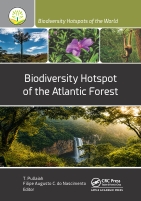
Biodiversity is declining at an alarming rate due to anthropogenic activities around the world. This book is the thirteenth volume in the series Biodiversity Hotspots of the World, which highlights the 36 hotspot regions of the world, regions that have been designated as reaping maximum benefit from preservation efforts. This series is our humble attempt to document these hotspots as a conservation and preservation measure. The concise volumes in this series focus on the most interesting and important properties of these hotspots, covering geography, geology and climate; diversity of macrofungi, lichens, bryophytes, fresh water fishes, amphibians, reptiles, mammals, phytoplankton and zooplankton and much more. And of course, the unique threats and conservation efforts for the areas are addressed as well. CONTENTS: About the Authors / Editors: Editors: T. Pullaiah, PhD Former Professor, Department of Botany, Sri Krishnadevaraya University, Andhra Pradesh, India T. Pullaiah, PhD, is a former Professor at the Department of Botany at Sri Krishnadevaraya University in Andhra Pradesh, India, where he has taught for more than 35 years. He has held several positions at the university, including Dean, Faculty of Biosciences, Head of the Department of Botany, Head of the Department of Biotechnology, and Member of Academic Senate. He was President of Indian Botanical Society (2014), President of the Indian Association for Angiosperm Taxonomy (2013), and Fellow of Andhra Pradesh Akademi of Sciences. He has been awarded with various prestigious awards for his work. Under his guidance 54 students obtained their doctoral degrees. He has authored 65 books, edited 45 books, and published over 340 research papers. His books include Mangroves: Biodiversity, Livelihoods and Conservation (Springer), Ethnobotany of India (5 volumes, Apple Academic Press), Global Biodiversity (4 volumes, Apple Academic Press), Monograph on Brachystelma and Ceropegia in India (CRC Press), Apomixis in Angiosperms (CRC Press), Invasive Alien Species ( 4 volume, Wiley International), Advances in Cell and Molecular Diagnostics (published by Elsevier), Camptothecin and Camptothecin producing Plants (Elsevier), Paclitaxel (Elsevier), Red Sanders: Silviculture and Conservation (Springer), and more. Dr. Pullaiah was also a member of the Species Survival Commission of the International Union for Conservation of Nature (IUCN). Professor Pullaiah received his PhD from Andhra University, India, attended Moscow State University, Russia, and worked as Postdoctoral Fellow during 1976–1978. Filipe Augusto C. do Nascimento, PhD Director, Museum of Natural History, Federal University of Alagoas, Brazil Filipe Augusto C. do Nascimento, PhD, is a biologist specializing in herpetology, with a primary focus on anuran larval biology. He received his PhD in Zoology from the Federal University of Minas Gerais, Brazil, in 2018. His research centers on neotropical anurofauna, and he has authored approximately 50 peer-reviewed articles and book chapters. He contributed to the development of the National Action Plan for the Conservation of Threatened Northeastern Brazilian Herpetofauna (2025). He is currently Director of the Museum of Natural History at the Federal University of Alagoas, Brazil. |

 Follow us for the latest from Apple Academic Press:
AAP is pleased to announce that the book The Geotourism Industry in the 21st Century: The Origin, Principles, and Futuristic Approach has been internationally recognized and included in the PITCH Horizon Europe project’s annotated bibliography (2025) as a key reference on geotourism and cultural heritage – among over 400 sources worldwide (entry No. 261).
Congratulations to Editor Bahram Nekouie Sadry, PhD, and the book’s chapter authors.
More info on the book here: https://www.appleacademicpress.com/the-geotourism-industry-in-the-21st-century-the-origin-principles-and-futuristic-approach/9781771888264
New Series Announcement: AAP Focus on Next-Generation Biotechnology . . . Books in this new series, written by leading experts who understand how students actually learn, will offer a bold, forward-looking collection that captures the explosive evolution of biological engineering and its profound impact on humanity, our planet, and beyond. Designed from the ground up to serve both undergraduate and postgraduate students, the series strikes the perfect balance between accessibility and depth. For more information: Click here Forthcoming: Encyclopedia of Higher Education—AAP is pleased to announce the forthcoming 13-volume set. Edited by Mustafa Kayyali, PhD, this work will serve as an authoritative resource that comprehensively explores the theory, practice, evolution, and emerging directions of higher education worldwide. Bridging historical perspectives with cutting-edge developments, this encyclopedia aims to capture the complexity and richness of higher education systems, policies, practices, and philosophies across diverse global contexts. For more information, please visit: Click here New Book Series: AAP Advances in Materials, Manufacturing & Computational Intelligence Techniques plans to offer a comprehensive exploration of cutting-edge research and applications in various engineering and scientific fields. This multidisciplinary series caters to a wide range of readers, from researchers and academics to industry professionals, providing in-depth knowledge and practical insights into solving complex problems. The series explores into a diverse array of topics, including advanced materials, manufacturing techniques, and computational intelligence. For more information, visit: Click here New Book Series: AAP Series on Waste Biomass Valorization will explore the transformation of biomass resources into valuable products, addressing the growing need for sustainable alternatives to fossil fuels and non-renewable resources. For more information and to propose a book, please visit: Click here Congratulations to Hafiz Ansar Rasul Suleria, PhD, for receiving the Dean’s Award for Excellence in Research from the University of Melbourne, Australia, in recognition for his exceptional performance and strong commitment to advanced research in food science. Dr. Suleria is editor of AAP’s book series Innovations in Plant Science for Better Health: From Soil to Fork. For more information, visit: Click here Congratulations to Dr. Christian Mancas. His book Conceptual Data Modeling and Database Design: A Fully Algorithmic Approach was one of the 6 Best Data Modeling ebooks for Beginners by BookAuthority, a leading site for book recommendations. For more information, visit: Click here COMMENTS FROM AAP EDITORS AND AUTHORS AAP book title: Advances in Audiology and Hearing Science (2-volume set) “I have collaborated with AAP during the process of bringing my two-volume editing work to a final publishing phase. AAP support has been truly important throughout the initial and final stages of the book. While the majority of the publishing work is done at the early stages, the final touches that include the last-minute corrections of the authors are extremely crucial to the quality the book tries to convey. The assistance of AAP during the last stages of corrections and communication with the authors was a very positive contributor to my state of mind during those stressful moments. I recommend the publishing experience with AAP to other editors of scientific material.” —Stavros Hatzopoulos, PhD, Hearing Science Laboratory, University Hospital of Ferrara, Ferrara, Italy AAP book title: Nanotechnologies: The Physics of Nanomaterials (2-volume set) “I was very pleased with the interaction and support of the team at Apple Academic Press. They provided me with regular and useful information and updates throughout the publishing procedure. I am also very happy with the final product, which is of good quality. The books are now available and are professionally distributed through the various channels. I would like again to thank the team at AAP for all their hard work and support.” —David Schmool, PhD, Director, Groupe d’Etude de la Matière Condensée GEMaC, National Centre for Scientific Research, Université de Versailles/Saint-Quentin, Université Paris-Saclay,Versailles, France AAP book title: Physiology of Molluscs (2-volume set) “I have enjoyed the full benefit of support, encouragement, and kindness from the members of AAP I have had the pleasure of being associated with. In the same vein, I hope AAP was satisfied with the book series I have edited in advancing the knowledge. It has been a great journey and was a great pleasure and satisfaction. Advancing scholarship through publications is one of the best routes publishers can take, and I would hold AAP as one of the best ones.” —Saber Saleuddin, PhD, University Professor Emeritus, Department of Biology, York University in Toronto, Ontario, Canada AAP book title: Green Chemistry and Sustainable Technology: Biological, Pharmaceutical, and Macromolecular Systems “It had been my pleasure to work with the production team of Apple Academic Press for almost a decade. The best presentation of our work was due to their hard work and with careful scrutiny. I am sure that every one of them takes extra pains to publish the book nicely, maintaining the quality and timeliness. It was a rewarding experience to work with AAP. I would like to publish more with AAP on my upcoming projects in future also.” —Prof. Suresh C. Ameta, Professor of Eminence (Distinguished Professor), Faculty of Science, PAHER University, UDAIPUR, India AAP book title: New Frontiers in Nanochemistry, 3-volume set, plus many others "Publishing a book, either as author or editor, is a journey from the initial vibration to the piece of knowledge towards the present future of humanity at large. Such a journey is about climbing and tunneling, about diving and driving through, about inspiration and tuning, about hard working in every instance; and it is also about time. Very few Global Publishers have the wisdom and patience and kindness and openness to authors, contributors, and readers while being truly crafting oriented as Apple Academic; yet all is about people and their education, vision and assumed mission; the Apple Academic Team heartily succeed that in achieving the world class scholarly acclaim by the quality involvement in all chain of plus value added with each publishing event. Hearty Compliments! Excelsior Apple Academic!" —Mihai V. Putz, PhD, Dr.-Habil., MBA, Professor, Faculty of Chemistry, Biology, Geography, Laboratory of Computational and Structural Physical Chemistry for Nanosciences and QSAR, West University of Timi?oara; PI-1, Laboratory of Renewable Energies - Photovoltaics, National Research and Development Institute for Electrochemistry and Condensed Matter (INCEM), Timi?oara, Romania AAP book title: The Chemical Century: Molecular Manipulation and Its Impact on the 20th Century “All my experiences with AAP have been very positive. I entrusted AAP with the publication of The Chemical Century: Molecular Manipulation and Its Impact on the 20th Century and found the quality of the book that they produced to be excellent. My two contacts at the company were very responsive and efficient throughout the publication process.” —Richard J. Sundberg, PhD, Professor of Chemistry, University of Virginia, Charlottesville, Virginia, USA |